When One Is Never Enough: The Hidden Cost of Buying Multiples You Don't Actually Need
Let's do a quick mental walk through your home. How many of the same item do you own in slightly different versions? Maybe it's four nearly identical white T-shirts, a backup coffee maker still in the box "just in case," or three different sets of measuring cups scattered across your kitchen drawers. If any of that sounds familiar, you're definitely not alone — and you're probably spending a lot more than you think.
The habit of buying multiples is one of those sneaky budget drains that doesn't look like a problem until you zoom out and see the full picture. It's not one big purchase that wrecks your finances. It's dozens of small, totally reasonable-feeling decisions that quietly pile up into hundreds — sometimes thousands — of dollars sitting idle in your home.
Why Our Brains Love a Backup Plan
There's a real psychological reason people end up with duplicates, and it's not just carelessness. A lot of it comes down to what behavioral economists call loss aversion — the fear of not having something when you need it outweighs the discomfort of spending money on it now.
When you find a shirt that fits perfectly, your brain immediately starts catastrophizing: What if they discontinue this? What if I spill something on it? So you buy two. Or three. Same thing happens with kitchen gadgets, cleaning supplies, and even tech accessories. The logic feels airtight in the moment, but the math tells a different story.
There's also the comfort angle. Owning multiples of something you love creates a sense of security and abundance — feelings that are genuinely pleasant. Retailers know this too. Sale pricing and "stock up and save" messaging are specifically designed to make buying more feel like the responsible choice. Spoiler: it usually isn't.
The "Color Variant" Trap
One of the most common ways Americans accumulate duplicate spending is through color and style variants. You find a pair of jeans that fit like a dream, so naturally you grab them in three washes. You love a particular hoodie, so you pick it up in gray, navy, and black. Each purchase feels justified because hey — these are different colors, not the same item.
But here's the thing: if you're reaching for the same silhouette every time, you're essentially paying full price multiple times for the same wearing experience. Over a year, this pattern across clothing, shoes, and accessories can easily run $300 to $600 for the average shopper — and that's a conservative estimate.
The smarter move? Wear the one you have until it genuinely wears out, then replace it. If you truly love it enough to own it in multiple colors, give yourself a waiting period. Buy one, wear it regularly for a month, and then decide if you actually reach for it enough to justify a second version.
Kitchen and Home: Where Duplicates Really Add Up
Clothing gets a lot of attention, but the kitchen is where duplicate spending can get genuinely expensive. Think about how many single-use gadgets, redundant tools, and "backup" appliances are living in your cabinets right now.
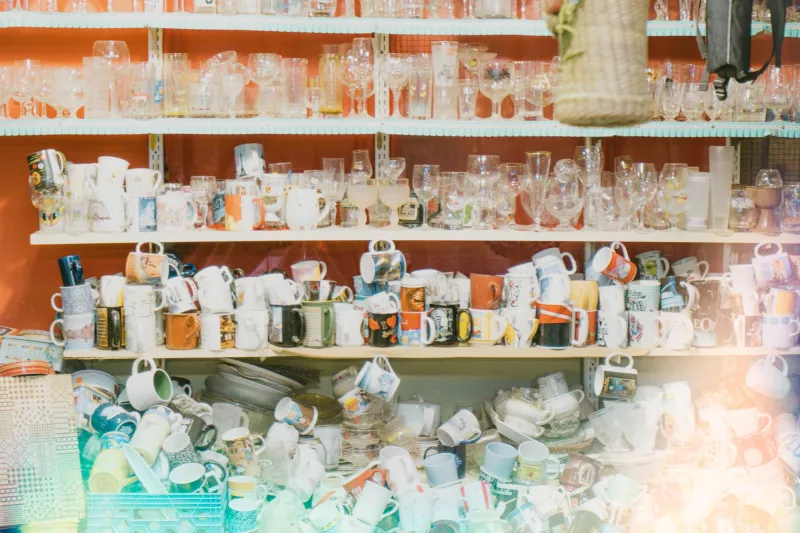
A lot of households have two can openers (one in the drawer, one in a random cabinet), multiple sets of mixing bowls, and at least one appliance that was purchased to replace another one that never actually broke. There's also the phenomenon of buying a new version of something because the current one might be getting old — even though it still works perfectly fine.
According to various consumer surveys, the average American household spends somewhere between $200 and $400 annually on kitchen items that overlap with things they already own. That's not even counting larger appliances. It adds up fast when you're buying a "better" blender while the old one is still blending just fine.
The "Insurance Policy" Purchase
This is the rationalization that does the most damage: buying something as a backup in case the original breaks or runs out. It sounds practical. Sometimes it genuinely is. But most of the time, it's just anxiety spending dressed up as preparedness.
Ask yourself: How often have you actually needed that backup? If you bought a spare phone charger because you were worried about losing the first one — and you still have both — that's an insurance policy you paid for and never cashed in. Multiply that logic across your household and you've got a lot of money tied up in "just in case" scenarios that rarely, if ever, materialize.
The exceptions are real and worth noting. If you use something daily and it's difficult to replace quickly (think: a specific medication, a work tool, a staple grocery item you go through fast), keeping a backup makes genuine sense. The key is being honest about whether the item falls into that category or whether you're just soothing anxiety with a purchase.
A Simple Framework for Auditing Your Multiples
Before you go digging through every cabinet in your house, here's a straightforward way to evaluate whether a duplicate earns its place:
1. Frequency test. Do you use both versions regularly, or does one just sit there? If one version is collecting dust, that's your answer.
2. Replacement timeline. How hard is this item to replace if it breaks or runs out? If you can get a new one delivered in two days, a backup probably isn't necessary.
3. Cost-to-use ratio. Divide what you paid by how many times you've actually used it. If that number is painful, the duplicate isn't pulling its weight.
4. The honest why. Ask yourself why you bought the second one. Was it a genuine need, a sale you couldn't resist, or anxiety in disguise? The answer usually tells you everything.
Moving Forward Without the Extras
The goal here isn't minimalism for its own sake — it's intentionality. Some multiples make total sense. A household with three kids probably needs more than one set of scissors. A home baker who's serious about their craft might genuinely use two stand mixers. Nobody's saying your lifestyle is wrong.
But for most people, a lot of the duplicates hanging around the house are there by default, not by design. They're the result of impulse buys, sale-triggered stockpiling, and that very human urge to hold on to options even when you don't need them.
Start small. Pick one category — your T-shirt drawer, your cleaning supplies cabinet, your collection of reusable water bottles — and count how many near-identical items you actually own. Then think about how much you paid for all of them combined. That number has a way of making the habit very real, very fast.
Once you start seeing duplicates for what they are — expensive emotional insurance — it gets a lot easier to stop buying them in the first place. And that's money that can go toward something you actually want, not just something you were afraid of not having.