More Isn't Always Better: The Hidden Price Tag on Buying in Bulk
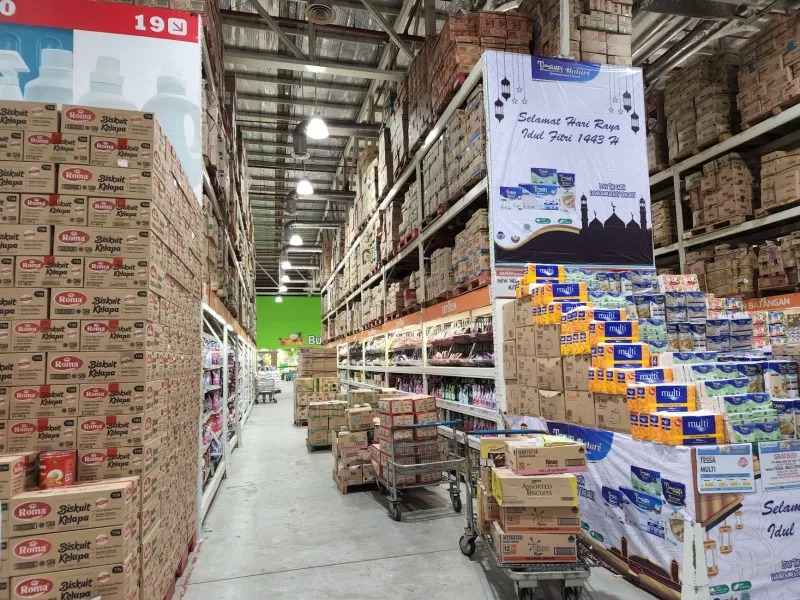
There's something deeply satisfying about rolling a giant cart through a warehouse store and loading it up with economy-sized everything. You're being responsible. You're planning ahead. You're saving money — at least, that's what the price-per-unit sticker is telling you.
But here's the thing: that sticker only tells part of the story. The rest of it plays out over the next few weeks, when the 48-pack of yogurt cups starts expiring, the industrial-sized bottle of shampoo tips over and leaks all over your bathroom cabinet, and you realize you bought enough paper towels to survive a small apocalypse in a one-bedroom apartment with no storage closet.
Bulk buying is one of those habits that feels financially savvy but can quietly drain your budget in ways that don't show up until well after the receipt is long gone.
The Unit Price Illusion
Let's start with the math that warehouse stores and online mega-deals want you to focus on: the unit price. Yes, buying 36 rolls of toilet paper is almost always cheaper per roll than buying a 6-pack. That part is real. But the unit price calculation assumes one very important thing — that you'll actually use everything you buy before it goes bad, gets damaged, or becomes irrelevant to your life.
For non-perishables like toilet paper or dish soap, that assumption usually holds up. But for anything with an expiration date — food, medicine, certain cleaning products, even some beauty items — the math gets a lot murkier. If you throw away a third of what you bought, you didn't save money. You just paid full price for two-thirds of it and wasted the rest.
According to USDA data, American households throw away roughly 30 to 40 percent of their food supply. Bulk buying, especially of perishables, is a significant contributor to that number.
Storage Isn't Free
This one catches people off guard. When you buy in bulk, you need somewhere to put it all. For many American households — especially apartment dwellers, urban renters, or anyone in a smaller home — that space either doesn't exist or has to be created.
Some people rent storage units. Others buy shelving, bins, or organizers to accommodate their stockpile. Some end up converting a spare room or garage corner into a makeshift pantry. All of that costs money. Sometimes it costs more than the savings you're trying to lock in.
Even if you don't spend cash directly on storage, there's an opportunity cost. That garage space, that hall closet, that corner of the basement — those are resources you're dedicating to holding products instead of using for something else. That's a real trade-off worth thinking about.
Lifestyle Inflation Hiding in a Giant Box
Here's a sneaky one: when you have more of something, you tend to use more of it. Behavioral economists call this "quantity-induced consumption," but you've probably experienced it without knowing the fancy term.
Buy a regular-sized bottle of olive oil, and you'll use it carefully. Buy a two-liter jug, and suddenly you're a little more generous with every pour. Same goes for snacks, cleaning sprays, laundry detergent — really anything where the quantity is visible and abundant. Having more of something psychologically signals that it's okay to use more of it.
This means your bulk purchase doesn't just affect your wallet upfront — it can change your usage patterns in ways that accelerate how fast you go through the product, reducing or completely eliminating the savings you were counting on.
When Bulk Buying Actually Makes Sense
None of this means bulk buying is always a bad idea. There are genuine scenarios where buying in quantity is the smart move:
You use it constantly and it doesn't expire. Batteries, garbage bags, printer paper, laundry pods — if you go through it regularly and it'll keep indefinitely, buying more at a lower unit price is straightforward savings.
You have the space to store it properly. A large household with a dedicated pantry or extra storage is in a very different position than someone in a studio apartment. Space changes the calculation significantly.
You're splitting the cost with others. This is where warehouse clubs really shine. If you're splitting a bulk buy with a roommate, family member, or neighbor, the savings become more real because you're dividing both the cost and the quantity.
It's a product you've been buying consistently for years. If you've used the same brand of dish soap for a decade and aren't likely to switch, stocking up makes sense. If you're buying a new product in bulk because the deal looks good, you're gambling on whether you'll even like it enough to finish it.
The Membership Fee Factor
Warehouse clubs like Costco and Sam's Club charge annual membership fees — typically ranging from $50 to $130 depending on the tier you choose. That fee has to factor into your savings calculation.
If you're spending $65 a year on a membership and saving $40 a year on bulk purchases, you're not saving money — you're losing $25 annually for the privilege of shopping in a very large building. To actually benefit from the membership, you need to be buying enough, frequently enough, to offset that upfront cost.
Most people don't do this math. They join, feel good about the decision, and then continue shopping there out of habit rather than verified savings.
A Smarter Approach to Stocking Up
The goal isn't to avoid bulk buying entirely — it's to do it intentionally rather than reflexively. A few habits that help:
-
Audit before you restock. Before heading to a warehouse store or clicking on a mega-bundle deal online, check what you already have at home. It's surprisingly common to buy in bulk only to discover you already have plenty.
-
Calculate the full cost. Unit price plus expected waste plus storage cost minus any membership fees. That's the real number.
-
Set a "bulk buy only" list. Identify the specific products where buying more makes consistent sense for your household, and stick to that list instead of browsing.
-
Watch the expiration dates. Before buying anything perishable in bulk, check the date and honestly assess whether your household will get through it in time.
Bulk buying can absolutely be a smart financial strategy — but only when it's approached with a clear head rather than the slightly euphoric feeling of loading a giant cart with economy-sized everything. The savings are real when the conditions are right. When they're not, you're mostly just buying more stuff you'll eventually have to deal with.
And at ShopMix365, we're all about helping you buy smarter — not just more.