Paying Extra for the Past: How Retro Branding Gets You to Spend More on Nostalgia
There's something undeniably appealing about a product that looks like it belongs in your grandparents' kitchen or a 1970s record shop. The rounded edges, the warm color palettes, the fonts that feel like they were pulled straight off a diner menu — retro design hits different. But here's the thing nobody puts on the price tag: you're paying a premium not for better performance or higher quality, but for a feeling. And that feeling has a pretty steep markup.
If you've ever browsed a home goods site and noticed that the pastel-colored retro mini fridge costs nearly double its sleek, modern counterpart with identical specs, you've already met the nostalgia tax.
What Exactly Is the Nostalgia Tax?
The nostalgia tax is the extra amount you pay when a product leans hard into a vintage aesthetic rather than a contemporary one. It's not a formal fee, obviously. It's baked into the retail price, justified by branding, and powered entirely by emotion.
Marketers have known for decades that nostalgia is one of the most reliable emotional triggers in consumer behavior. Research consistently shows that people associate the past with warmth, simplicity, and a sense of personal identity. When a brand taps into that feeling — through design, packaging, or even a catchy throwback campaign — shoppers are more likely to feel a personal connection to the product. And personal connection translates directly into willingness to pay more.
The result? A Polaroid-style instant camera that costs $80 while a digital camera with far superior image quality sits on the same shelf for $45. A cast-iron-looking enamel kettle with a retro silhouette priced at $65, next to a modern electric kettle with better temperature control for $30.
Real-World Examples Where the Throwback Version Costs Way More
Let's get specific, because the gap between retro pricing and modern pricing is often pretty wild when you actually line them up.
Turntables and vinyl players: The resurgence of vinyl has been well-documented, and with it came a flood of vintage-styled record players. A basic modern Bluetooth speaker with excellent sound can run you $40–$60. A vintage-aesthetic turntable — often with mediocre audio quality by audiophile standards — routinely sells for $150 to $300. You're paying for the look, the ritual, and the story you get to tell about it.
Retro sneakers: This one's practically a cultural institution at this point. Classic silhouettes from the '80s and '90s — reissued or inspired by that era — regularly retail for $100 to $200+, while functionally superior running or cross-training shoes built with modern materials can be found for $60 to $80. The nostalgia markup on footwear is enormous.
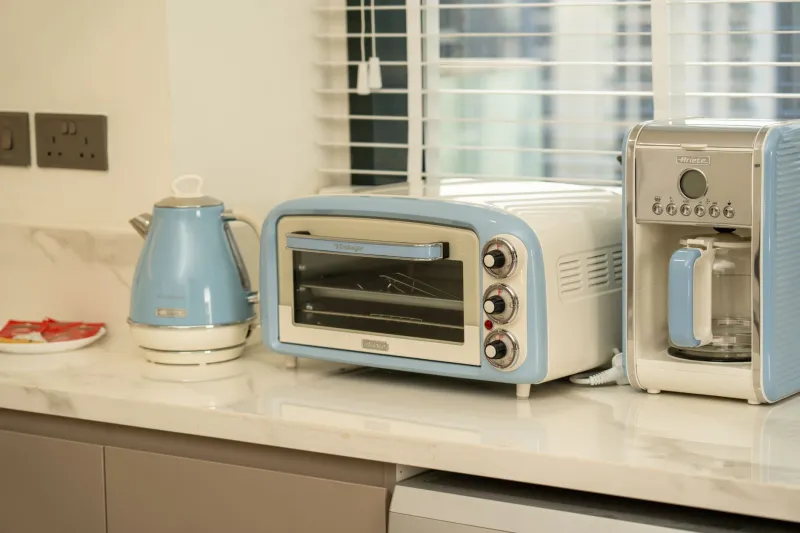
Kitchen appliances: Smeg, Cuisinart's retro line, and similar brands have built entire product identities around mid-century design. A Smeg toaster can run $150 to $200. A comparably performing modern toaster? Closer to $30 to $50. That $100+ gap is pure aesthetic surcharge.
Film cameras and instant photography: Fujifilm Instax and similar instant cameras are charming and genuinely fun. They're also significantly more expensive per photo than digital alternatives — and the camera itself costs more than entry-level digital point-and-shoots. The experience is the product, and experience costs extra.
The Psychology Behind Why It Works So Well
Brands don't charge more for retro products because they cost dramatically more to make. In many cases, the manufacturing process is comparable or even simpler than modern alternatives. The premium exists because the market supports it — and the market supports it because of how nostalgia rewires your decision-making.
When you feel nostalgic, your brain essentially puts a protective filter over your critical thinking. Studies have shown that nostalgia increases a person's sense of social connectedness and self-continuity — basically, it makes you feel more like yourself. Products that trigger that feeling get mentally categorized as more meaningful, more valuable, and more worth spending on.
There's also a social dimension. Retro products often signal something about the owner — taste, awareness of cultural history, a certain aesthetic sensibility. Buying the vintage-style item isn't just a purchase; it's a statement. And people pay more to make statements.
Retailers and brands are fully aware of all this. The retro aesthetic isn't accidental — it's a calculated design and pricing strategy.
Is the Premium Ever Actually Worth It?
Honestly? Sometimes, yes. If you're buying a vinyl record player because you genuinely love the ritual of putting on a record — the physical act of it, the warmth of the sound, the intentionality — then the premium might be completely justified for your lifestyle. If a retro-style kitchen appliance genuinely sparks joy every morning when you make coffee, that emotional return is real and valid.
The key is being honest with yourself about why you're reaching for the throwback version. Ask a few simple questions before you check out:
- Am I buying this for function or for feeling? Neither answer is wrong, but knowing which one helps you decide if the price gap makes sense.
- Will the novelty wear off? Retro aesthetics can feel exciting in the store and less special six months later when it's just another appliance on your counter.
- Is there a modern alternative that does the job better for less? In a lot of categories, the answer is yes.
- Am I paying for quality or for branding? Sometimes retro products are genuinely well-made. Often, the build quality doesn't match the price.
How to Shop Smarter When Nostalgia Is Calling
You don't have to swear off retro products entirely — that's not really the point here. The goal is to go in with clear eyes so you're making a deliberate choice rather than an emotionally driven one.
One approach: look up the actual specs side by side. If you're eyeing a vintage-style stand mixer, pull up the wattage, bowl capacity, and warranty details and compare them directly with a modern alternative at a lower price point. If the retro version wins on specs and you love the look, great — you've got a real reason to spend more. If the specs are comparable or worse, you're paying purely for the aesthetic.
Another move: check resale platforms. Retro-inspired products are popular gifts, which means they show up on secondhand sites pretty regularly — sometimes barely used. You can often find them at a significant discount and still get the look you want.
Finally, give yourself a 48-hour window before buying anything retro-styled that costs significantly more than a modern equivalent. Nostalgia is a fast-burning emotion. It tends to cool down quickly, and sometimes the urgency disappears along with it.
The Bottom Line
There's nothing wrong with loving the look of the past. Retro design is genuinely appealing, and the emotional response it creates is real. But it's worth knowing that the price difference between the throwback version and the modern one often has nothing to do with craftsmanship, materials, or performance — it has everything to do with how effectively the brand made you feel something.
Shop the feeling if it's worth it to you. Just make sure you're the one deciding that — not the marketing.